The royal international airtatoo 2025
An incredible yearly held show just above the city of swindon, each year held at RAF fairford, an incredible airbase wich has been doing millitairy operations since 1944.
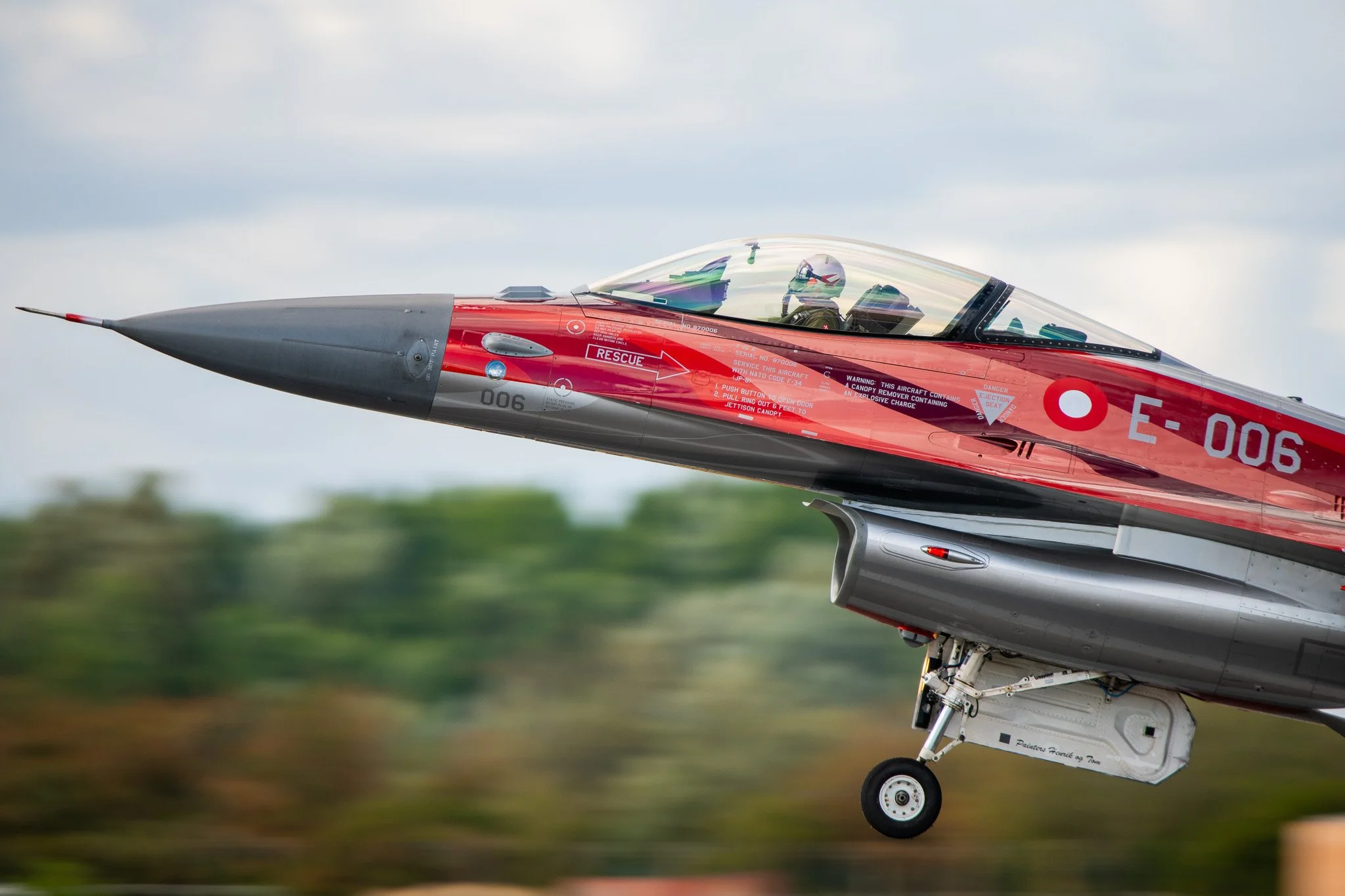
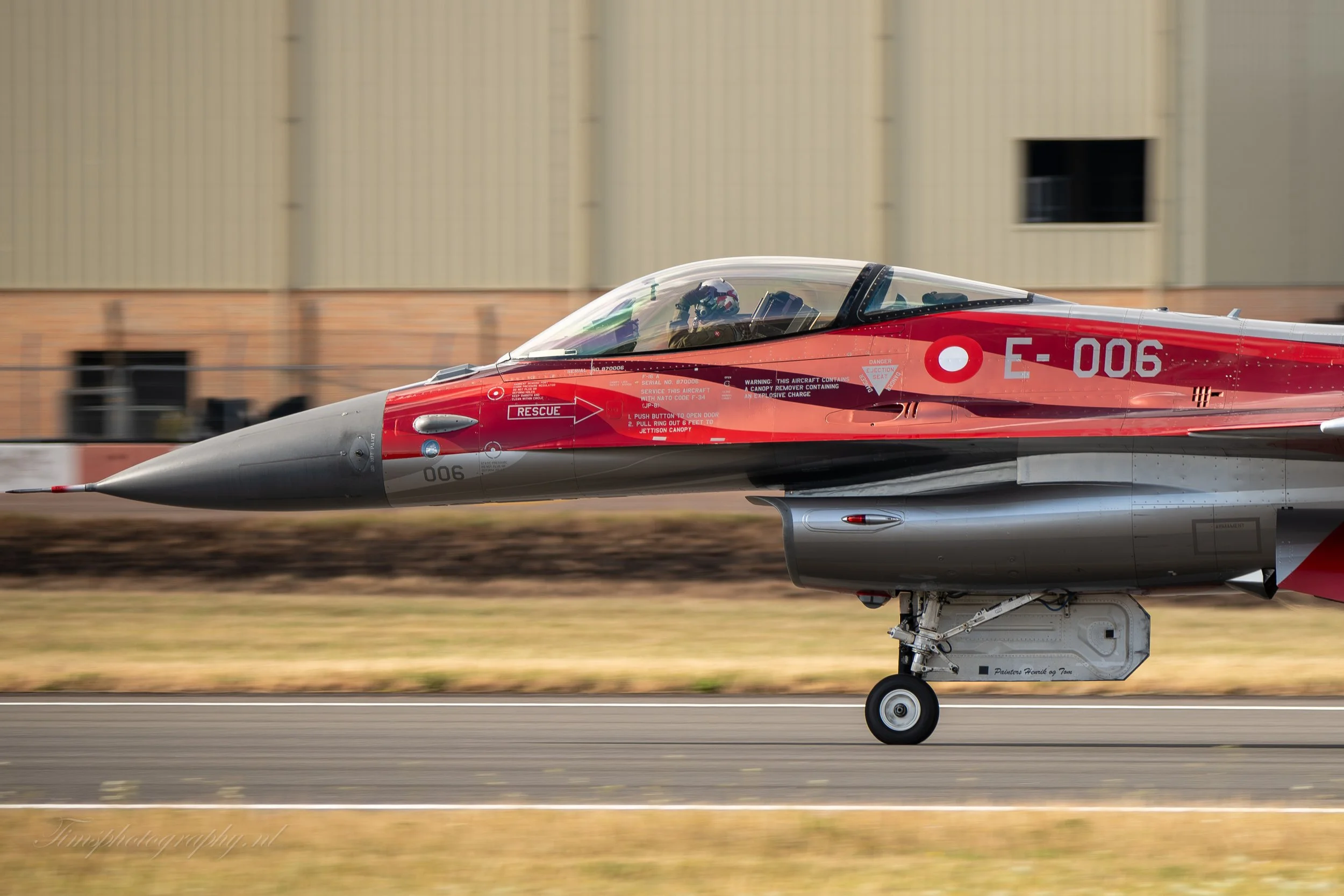
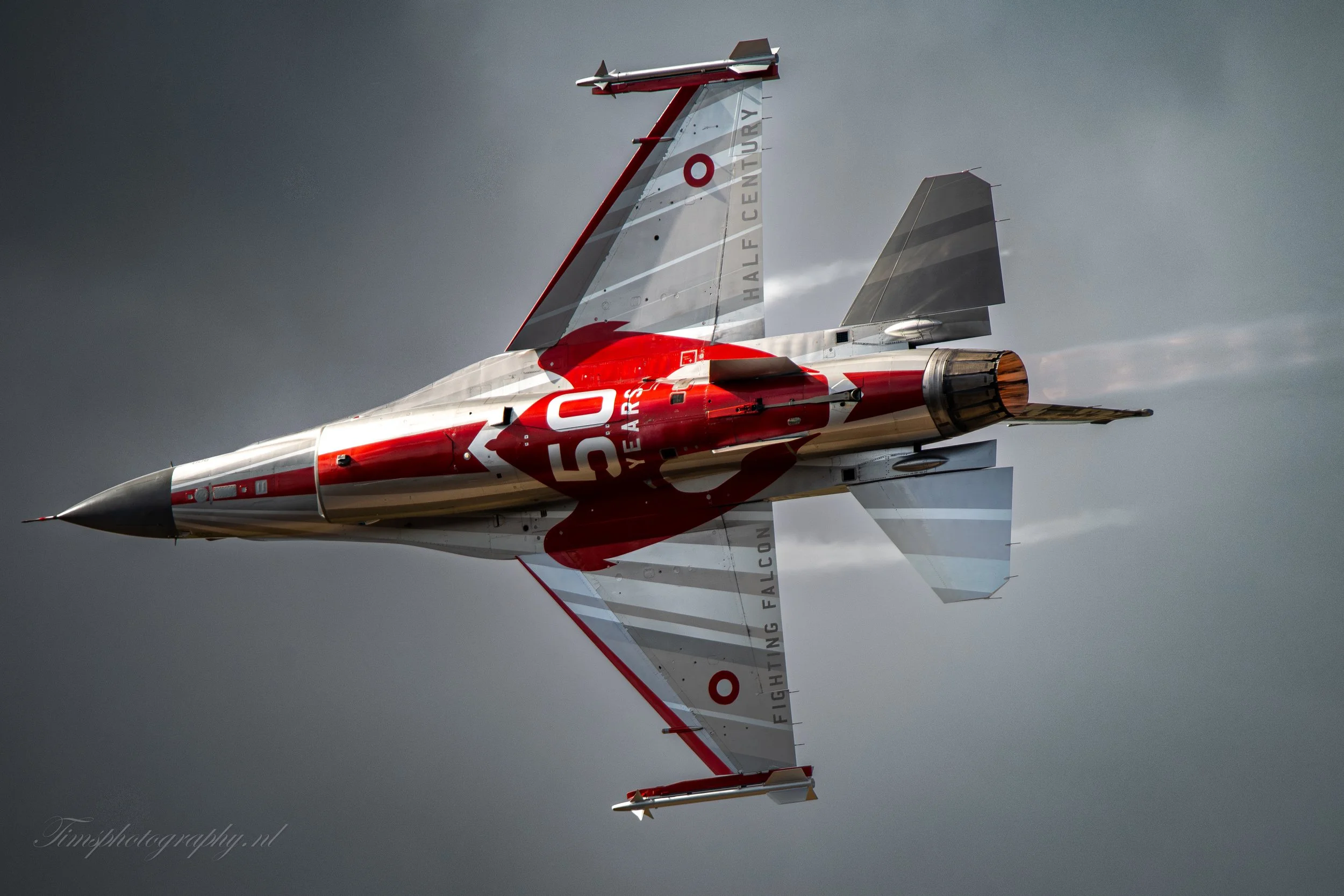
The RDAF F‑16 Solo Display Team has always been one of my favorites to watch. Seeing that single F‑16 roar across the sky, painted in the striking red-and-white Dannebrog colors, is just incredible. The pilot’s precision and control are amazing—sharp turns, vertical climbs, and passes so close it feels like you could reach out and touch the jet.
2025 was a special year, though bittersweet. It marked the final season for the team as Denmark transitioned from F‑16s to the new F‑35s. At airshows like the Royal International Air Tattoo, the Dannebrog F‑16 performed its last breathtaking displays, leaving trails of smoke and a sky full of awe. Watching it, you could feel the history and pride behind every maneuver—decades of service, skill, and passion for flight, all in one last salute to the skies.
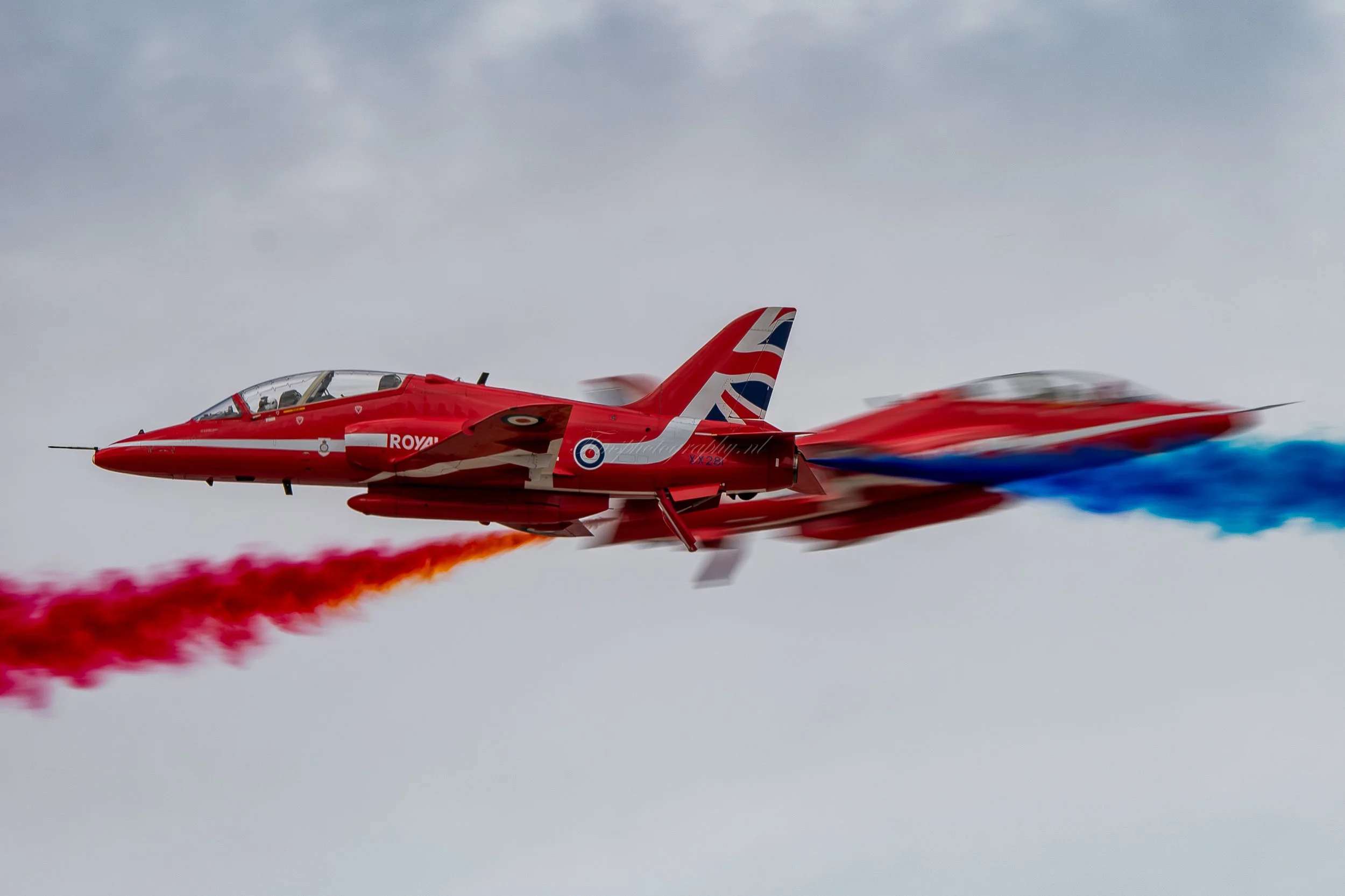
This photo shows two jets from the Royal Air Force Red Arrows flying close together, leaving colorful smoke trails behind them. At first, it looks like a beautiful show—but there’s a lot of science happening too.
The smoke trails are made by putting colored dye into the hot exhaust of the jet engines. The heat and fast-moving air turn the dye into vapor, creating bright streaks. The smooth, curved trails also show how air moves: the smoke follows the swirling patterns caused by the jets’ wings and bodies.
You might notice that the two jets in the background look a little blurry while the main jet is sharp. This is called motion blur, and it happens because the camera’s shutter was open just long enough to capture the fast planes, making them look like they’re moving really fast. The air around the jets also affects the smoke trails—when the jets turn, the smoke spreads out, showing how air turbulence and pressure changes work.
Flying this close together isn’t just for fun. Pilots have to think about the turbulence, lift, drag, and G-forces, keeping the jets only a few meters apart at over 500 km/h. Every turn and roll shows Newton’s laws of motion and Bernoulli’s principle in action, all while creating a stunning visual show.
This photo is the perfect mix of art and science: precise engineering, aerodynamic forces, and perfect timing all captured in one amazing image.
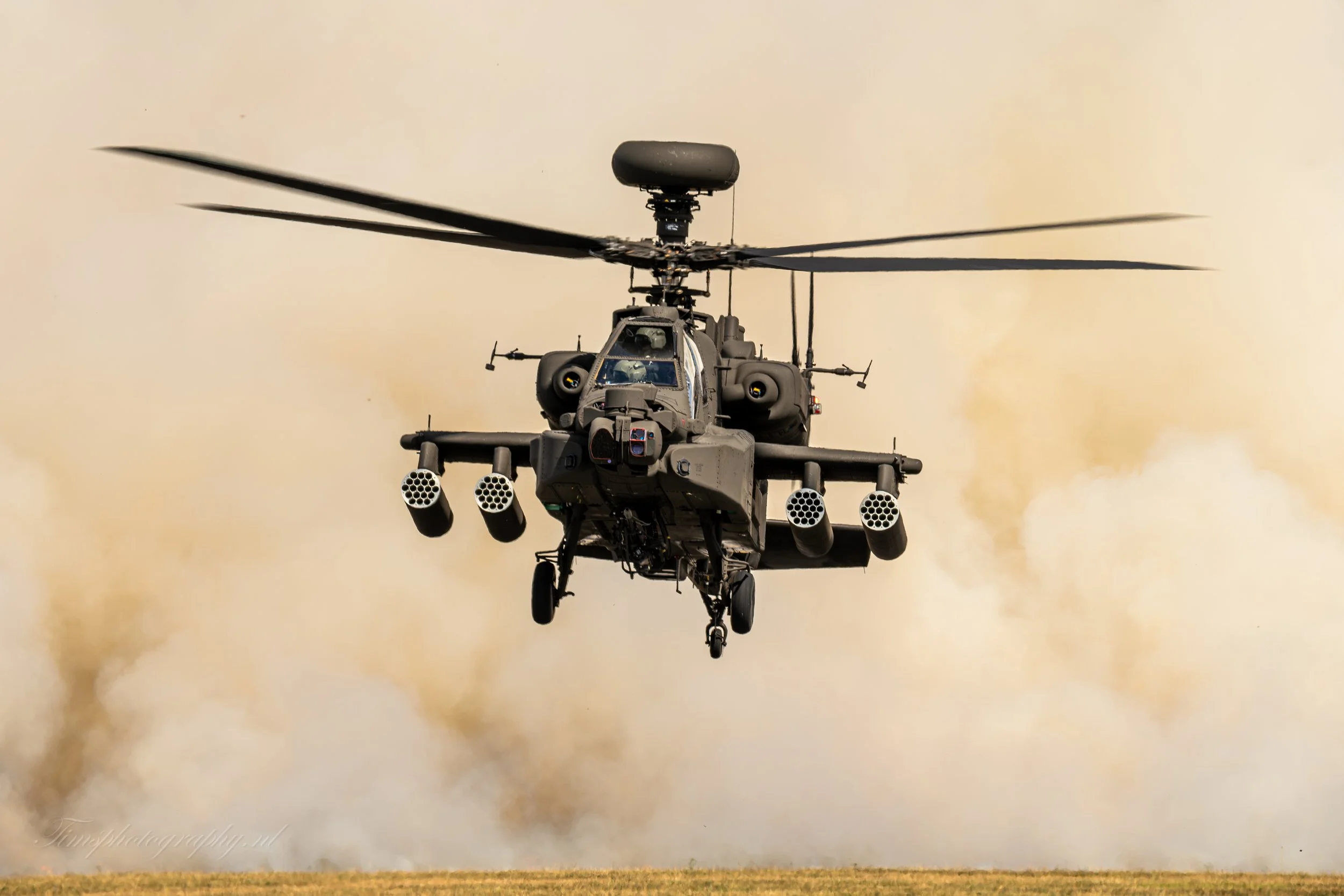
There’s something indescribable about watching an AH‑64 Apache go from calm to full-on firepower mode. Imagine it hovering low, rotor blades slicing the air, then all of a sudden firing rockets and cannon rounds — it’s pure controlled chaos. In a live‑fire demonstration, the Apache doesn’t just fly: it attacks. With its 30 mm M230 chain gun, it rattles out a steady stream of rounds. Add to that the Hydra‑70 rockets screaming out from its pods, and you’ve got a show that’s both terrifying and awe-inspiring. According to people who've seen these demos, the Apache can switch from smooth, tactical flight to a high-G attack posture in the blink of an eye.
At big events like airshows, seeing an Apache fire (even simulated or inert weapons) makes you feel the raw power and precision locked into that helicopter. It’s a beast—sleek, deadly, and utterly mesmerizing.